Vinted sniper bot speed: what actually helps you win good deals
A practical guide to faster Vinted deal detection: match delay, tighter filters, account readiness, auto-buy rules, and multi-marketplace follow-up.
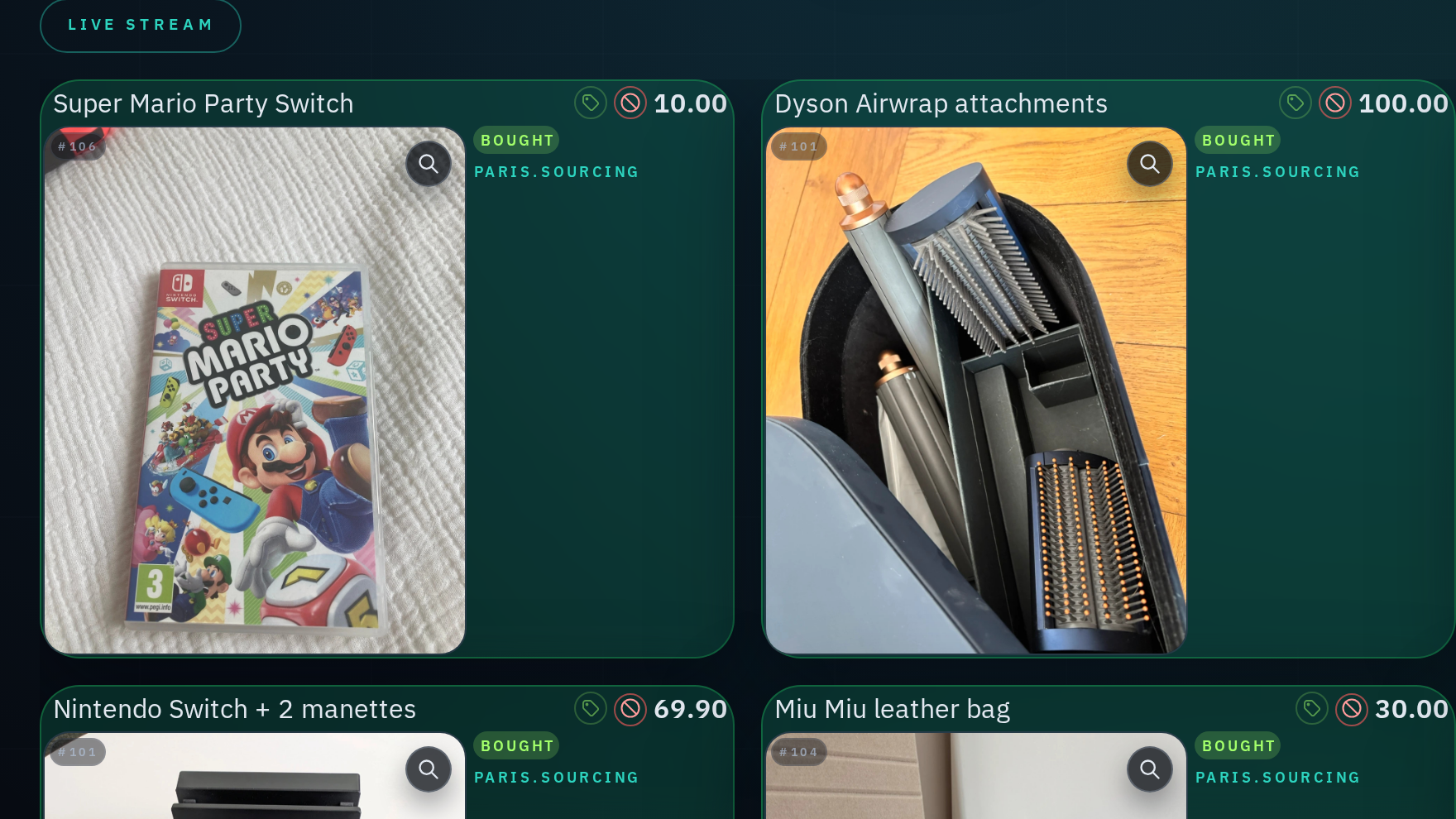
Speed is the reason most people look for a Vinted bot. The best listings can disappear before a manual search refresh, especially in categories where buyers know the resale spread: consoles, cameras, designer bags, sneakers, books, collectibles, and underpriced bundles.
But raw refresh speed is only one part of winning. A fast system that matches the wrong listings only creates noise. A serious deal workflow needs five layers:
- fast detection
- strict filters
- account readiness
- safe buying rules
- follow-up operations after the purchase
The market is bigger, so the race is faster
Vinted is no longer only a casual wardrobe app. Recent coverage from The Guardian describes Vinted expanding beyond fashion into phones, cameras, books, home goods, and other categories. The same article reported marketplace sales of about EUR 10.8 billion in 2025. The Wall Street Journal also reported 47% GMV growth and EUR 1.1 billion revenue for 2025.
That creates more opportunity, but it also means more professional buyers are watching the same categories.
For a buyer, the practical consequence is simple: a good deal is not just cheap. It is cheap, fresh, accurately detected, and actionable before competitors see it.
What “sniper speed” really means
A Vinted sniper workflow is not just “refresh faster.” It is the time between these moments:
- a listing appears on the marketplace
- your system receives or detects it
- the listing matches a filter
- the filter decides whether it is worth action
- the right account is ready
- the buy, offer, track, or manual review action starts
If one of those steps is weak, the whole workflow feels slow. A 0-second match delay is useful only when the filter is specific enough and the account is ready to act.
Build filters for decision speed, not search volume
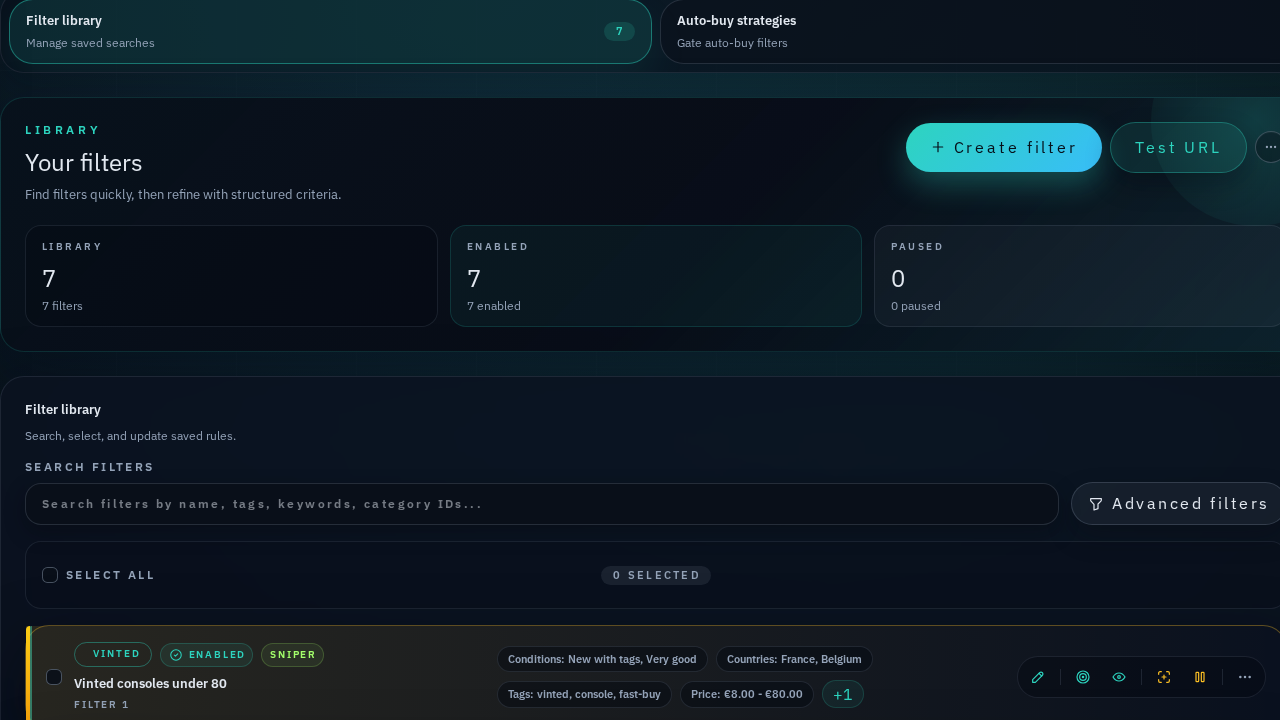
Most bad alert systems are too broad. They match hundreds of listings, then force the buyer to manually decide. That is not a sniper workflow; it is a notification inbox.
A stronger Vinted deal filter should include:
- positive keywords such as brand, model, line, size, or bundle terms
- negative keywords such as broken, parts, fake, no charger, empty box, replica, damaged
- a maximum buy price
- a target resale range
- category and condition constraints
- seller or location signals when useful
- a default action: buy, offer, track, or review
Use the free Vinted deal alert builder to turn a sourcing idea into a cleaner first filter before running it in Reflow.
If you already have a Vinted search URL, use the free Vinted sniper filter preview. It parses the idea locally, builds a filter brief, and replays demo matches so you can see whether the rule is specific enough before you create an account.
The speed checklist
Before judging whether a tool is fast enough, separate the parts of the workflow:
- Detection delay: how quickly a new listing reaches the feed.
- Filter precision: whether the match is specific enough to deserve attention.
- Decision latency: how quickly price, condition, seller, delivery, and margin can be checked.
- Account readiness: whether the buying account can actually complete the next step.
- Action route: whether the match should buy, offer, track, or wait for human review.
The common mistake is measuring only detection delay. In practice, a narrow filter with a ready account beats a noisy “fast” alert because the buyer does not waste the first seconds deciding what the alert means.
Account readiness is part of speed
The fastest filter still loses if the account is blocked, logged out, rate-limited, missing delivery preferences, or not ready to complete payment. This is why serious buyers need an operating surface, not just a bot command.
Before enabling any fast action, check:
- account login state
- delivery preferences
- payment handoff
- offer limits
- blocked sellers
- category-specific risks
- maximum price and margin rules
Reflow’s speed-focused workflow is designed around that order: detect fast, decide with rules, then act only when the action is ready.
Be careful with public “bot” positioning
The search term “Vinted bot” has demand, but the public promise matters. Vinted’s current terms restrict external software tools such as bots, scraping programs, crawlers, and spiders unless authorized or allowed by Vinted. That does not remove the buyer need for speed, but it does mean serious products should avoid reckless promises such as “undetectable bot.”
A stronger public category is:
- Vinted deal alerts
- Vinted sniper filters
- marketplace sourcing automation
- Vinted bot alternative
- fast marketplace buying workspace
This answers the same user intent while keeping the product framed around controlled operations.
Multi-marketplace matters after the first deal
Vinted is the main source for many buyers, but the business rarely stays Vinted-only. Recent reseller reporting from Business Insider shows operators selling across Vinted, Depop, eBay, and other channels as volume grows.
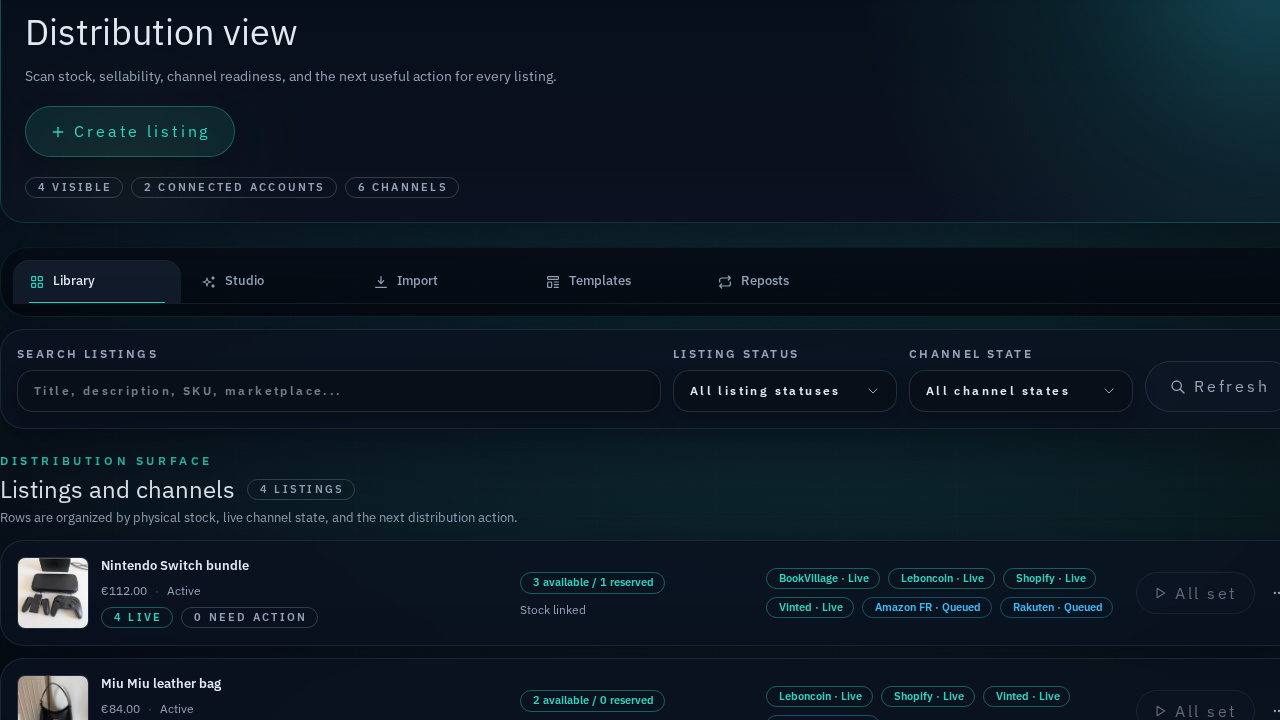
That is why the workflow should not stop at the buy button. After a good purchase, you still need to:
- track the order
- connect the item to stock
- prepare resale listings
- cross-list when relevant
- update pricing
- avoid selling the same unit twice
- reconcile margin
Reflow leads with deal speed, but the secondary workflows are there because buying creates operational work.
If your sourcing is already expanding, read the marketplace playbooks for Leboncoin deal alerts, Wallapop deal alerts, and eBay deal alerts.
The practical setup
Start with three saved filters:
- High-confidence auto-buy: narrow terms, strong margin, clean exclusions, ready account.
- Offer-first: good item but price needs negotiation.
- Track/manual review: promising item with condition, seller, delivery, or authenticity uncertainty.
Then measure:
- how many matches each filter creates
- how many were relevant
- how many were too late
- how many were bad buys
- how many turned into profitable resale
Speed wins attention. Discipline wins profit.