Vinted profit calculator: the resale margin formula serious sellers need
A practical Vinted profit formula for resellers who want to price stock, track margin, and avoid buying items that only look profitable.
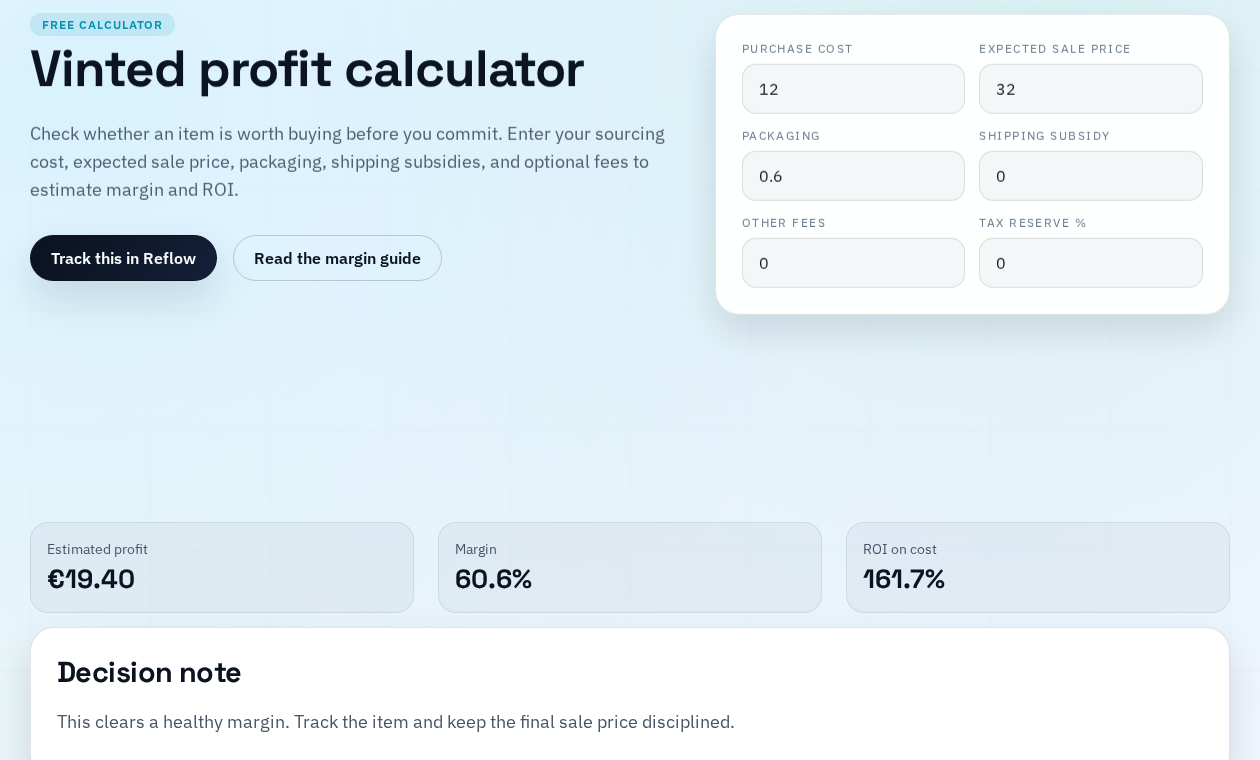
Vinted can make stock feel liquid: list quickly, ship quickly, reinvest quickly. That speed is exactly why margin discipline matters. If you buy because an item looks cheap, but ignore packaging, cleaning, returns, dead stock, or tax reserve, the profit can disappear after the sale.
Use this simple formula before buying:
Estimated profit =
expected sale price
- purchase cost
- packaging
- shipping you subsidize
- cleaning or repair
- platform/promotional costs
- tax reserve
Then calculate two ratios:
Margin = estimated profit / expected sale price
ROI = estimated profit / purchase cost
Margin tells you how much room you have if the item sells for less than expected. ROI tells you whether the cash tied up in stock is worth it.
A good Vinted deal is not just a cheap item
Vinted keeps growing well beyond casual wardrobe clear-outs. The Guardian reported that Vinted reached about EUR 10.8bn in sales through the marketplace in 2025, while the Wall Street Journal reported EUR 1.1bn in annual revenue and 47% GMV growth for that year. More volume means more opportunity, but also more sellers competing for the same attention.
That competition changes the buying decision. A reseller should ask:
- Can I sell this within my usual stock cycle?
- Is the condition good enough to avoid disputes?
- Do I know the final selling price after negotiation?
- Will this item need cleaning, measurements, extra photos, or careful packaging?
- Is this category still moving, or is it just cheap?
If you cannot answer those questions, the calculator should use conservative numbers.
Suggested margin bands
These are not universal rules, but they help prevent emotional buying:
- Under 15% margin: usually too thin unless the item is fast-moving and low effort.
- 15-30% margin: workable, but only if demand is strong and the item is easy to ship.
- 30-50% margin: healthy for repeatable reseller stock.
- 50%+ margin: attractive, but check authenticity, hidden flaws, and whether the price is realistic.
For low-cost stock, ROI can look huge while absolute profit is small. A EUR 2 buy that sells for EUR 6 might look like a strong ROI, but the actual profit may not justify photographing, listing, storing, messaging, packing, and shipping. Track both numbers.
Build a repeatable buying rule
Instead of asking “is this cheap?”, define a minimum rule:
I only buy if:
- expected profit is at least EUR X
- margin is at least Y%
- expected sell-through is under Z days
- no repair or authenticity uncertainty
That one rule keeps your sourcing consistent. It also makes your results easier to analyze later.
Turn the rule into a sniper filter
Once you know the minimum margin, turn the formula into a sourcing rule:
- max buy price from the calculator
- positive keywords for brand, model, size, or bundle
- negative keywords for condition and authenticity risk
- action rule: buy, offer, track, or review
- marketplace scope: Vinted first, then Leboncoin, Wallapop, eBay, or other channels
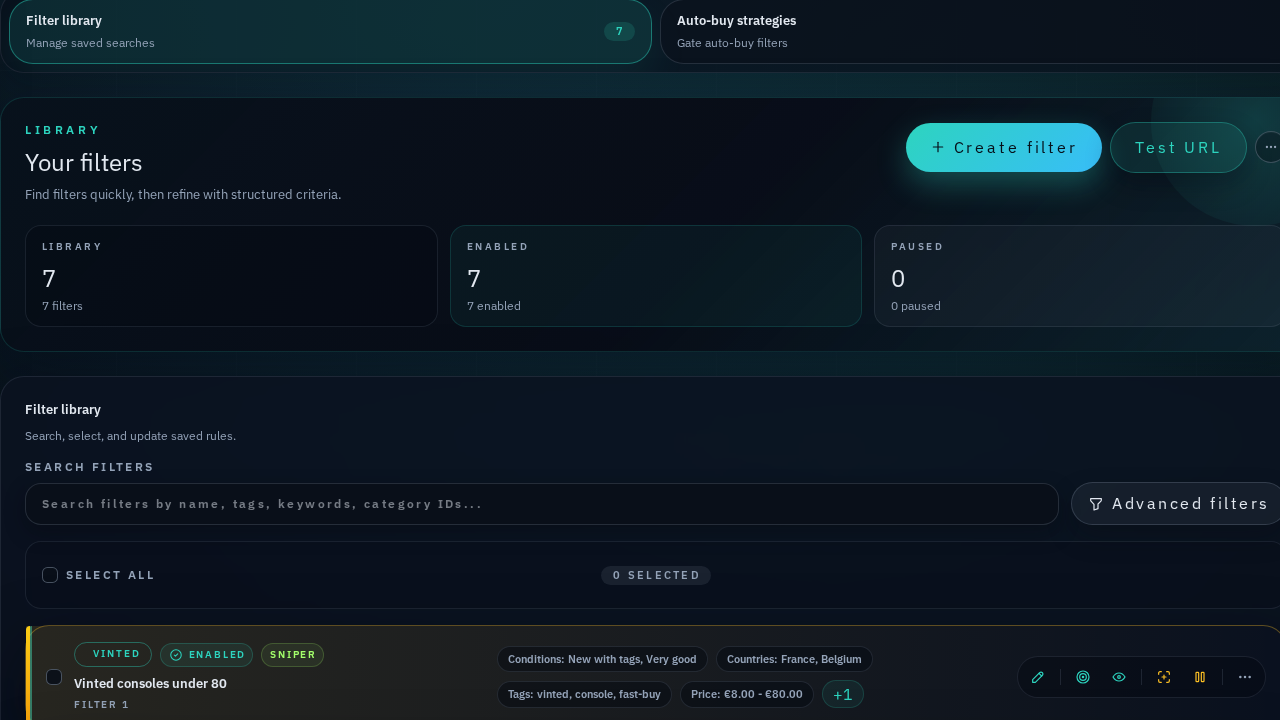
The free Vinted sniper filter preview is useful here because it shows whether the buying rule is narrow enough for fast action before you connect it to live monitoring.
Track stock after the purchase
A calculator helps before buying. A workspace helps after buying. Once the item is in stock, you need to know:
- where it is stored
- which marketplaces it is listed on
- whether it has active offers
- when the price was last adjusted
- whether it is reserved, sold, returned, or stale
This is where spreadsheets start breaking down. A recent Business Insider profile of a young Vinted reseller highlighted how inventory organization and AI-assisted listing workflows become important once sales move across Vinted, Depop, eBay, and other channels.
Use the calculator
Try the free Vinted profit calculator, preview the resulting sniper filter, then move recurring stock, listings, orders, and pricing rules into Reflow when you need a full operating workspace.